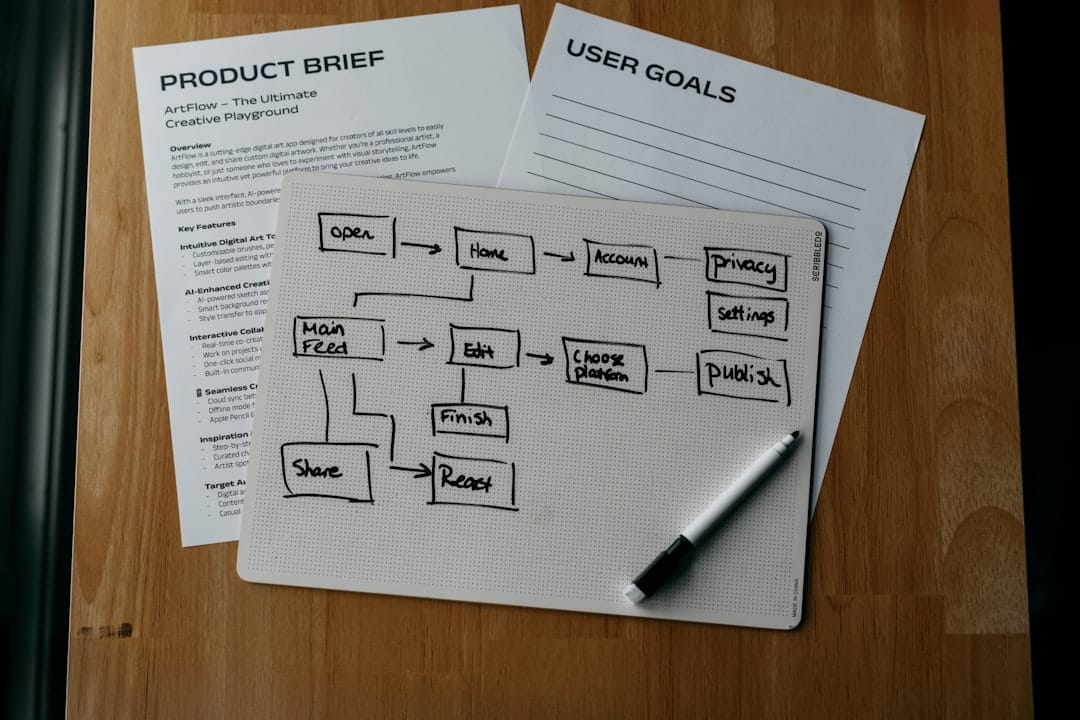
A freelance case study template gives you the structure that turns a project narrative into an argument for hiring you. The difference matters. A project narrative is interesting to the people who were in the room. A well-structured case study is persuasive to someone evaluating whether to bring you in on their project. Structure is what does the converting.
The Freelance Case Study Template, Section by Section
What follows is the full structure, section by section, with guidance on how to write each one. The sections apply across disciplines, writing, design, development, strategy, consulting, though the specific content in each will vary by the nature of the work.
Project title or descriptor Not the company name (unless you have permission to use it), a short phrase that describes the type of work and the context. “Onboarding redesign for a B2B SaaS tool” or “Content strategy for a professional services rebrand.” This is what appears in navigation, in a list of case studies, and in the header.
Client background (2–4 sentences)
Who is the client, in terms that are relevant to the project? Industry, company stage, size if meaningful, and the specific context that created the need for this project. Not a company biography, only the facts that explain why this project existed.
Example: A venture-backed HR software company had expanded from SMB to enterprise customers over 18 months. Their existing documentation was written for users who needed minimal hand-holding. Enterprise buyers required more structured onboarding to meet internal compliance requirements.
This section tells the reader whether this is a client type they recognize, whether the case study is relevant to them. That’s its only job.
The challenge (3–5 sentences)
What specifically was the problem, and why was it hard? The more precise this is, the more persuasive the case study becomes. Avoid: “they needed a better website.” Use: the specific constraint, gap, or failure that created the project.
Example: The existing onboarding flow assumed users had read the documentation before signing up. Enterprise users hadn’t, and the compliance team needed proof of user completion that the current system couldn’t generate. Three previous attempts to fix the problem had addressed the UX but not the reporting requirement.
The “why it was hard” element is what separates a challenge section from a brief. Most projects face real constraints, technical, political, budget, timeline, stakeholder conflicts. A case study that names the constraint is more credible than one that presents the project as a straightforward brief.
Your approach (the longest section, as many paragraphs as needed)
What you did, and why you made the decisions you made. This is the intellectual core of the case study and the section most freelancers write too thinly. The deliverable is not the approach; the reasoning is.
Structure it as a sequence of decisions: what you discovered first, what that led you to do, what you found when you did it, what you decided as a result. Not everything that happened, the decisions that mattered.
Example: The first thing I did was audit the existing flow for where users dropped off, not to fix the UX problem, but to understand whether the UX or the content was causing it. Turns out 70% of the drop-off happened at the third step regardless of the device or the user role, which suggested a content problem, not a navigation one. I restructured the approach from fixing the flow to rewriting the step-three content specifically, then added a lightweight completion-tracking mechanism the compliance team could generate reports from without custom development.
The length of this section should match the complexity of the project. A short project gets two or three paragraphs. A complex project gets five or six. Don’t pad; don’t over-compress.
The result (3–5 sentences)
What changed because of your work? If you have metrics, use them. If you don’t, see below. The result section should be specific, not “the client was happy” but what concretely improved.
Example: The completion rate for step three increased from 40% to 78% in the first month after launch. The compliance team was able to generate reports without engineering involvement for the first time. The client extended the engagement to cover the remaining onboarding modules.
For the full guide to writing results when clients don’t share data, qualitative proxies, relative framing, and what makes a non-metric result credible, see how to write a freelance case study.
Client quote (optional but recommended when available)
A specific quote from a named person at the client organization. Not a vague endorsement, something that describes the experience of working with you or the specific value you delivered.
“We’d been trying to fix this for three months before bringing in outside help. The approach was methodical and the results were immediate.” , Head of Product, [Company]
A quote attributed to “Marketing Manager” or a generic title is less persuasive than one from a named person with a real title. Ask your client for a specific quote when you’re wrapping up, you’ll get better material than what ends up in a Google review.
What I’d do differently (optional)
Use this sparingly. It works when the reflection reveals sophistication, “I’d instrument the flow before starting instead of after, so we’d have a clearer baseline”, and undermines the case study when it reads as apology, “I wish we’d had more time.” Include it when the insight is genuinely useful to a client reading the study; skip it otherwise.
How Long Should a Freelance Case Study Template Be
Short case study: 400–600 words. Works for straightforward projects, highly visual work with supporting explanation, or when the portfolio page will show multiple case studies and you don’t want any one to dominate.
Standard case study: 700–1,000 words. The most common format. Enough room to explain the problem, the process, and the result with specificity, without becoming a project report.
Long-form case study: 1,200–2,000 words. Appropriate for complex, high-value projects with multiple phases, a long timeframe, or significant strategic context. Use sparingly, most freelancers don’t have more than one or two projects that warrant this length.
The mistake is defaulting to long. A dense, detailed case study that loses the reader after two paragraphs is less effective than a sharp, focused one that gets read in full. Read your case study as a client would: if you’d stop reading it at any point, cut everything after that point or rewrite the section until you wouldn’t.
Formatting the Finished Case Study
Keep the visual presentation simple. A clear project title, the sections in logical order, good whitespace, and images or screenshots where they add something specific. Images should show the work, the before and after, the deliverable in context, the document or interface, not stock photography.
The case study can live as a page on your website, as a PDF you send during proposals, or both. The PDF version is useful for clients who prefer to review offline or share with colleagues. Keep the two versions in sync, the most common problem is a PDF that’s a year out of date while the website has been updated.
For the full set of components that belong on your portfolio and website, see what to include in a freelance portfolio. For how case studies factor into the client vetting process specifically, see how clients vet freelancers.
The template only becomes useful when you write the first one. Pick your best project, the one where you made real decisions, where something changed, where you could explain what you did and why in a conversation. Fill in the sections. The whole document takes two to four hours to write well. It’ll do more work in your next proposal than anything else in your portfolio.